
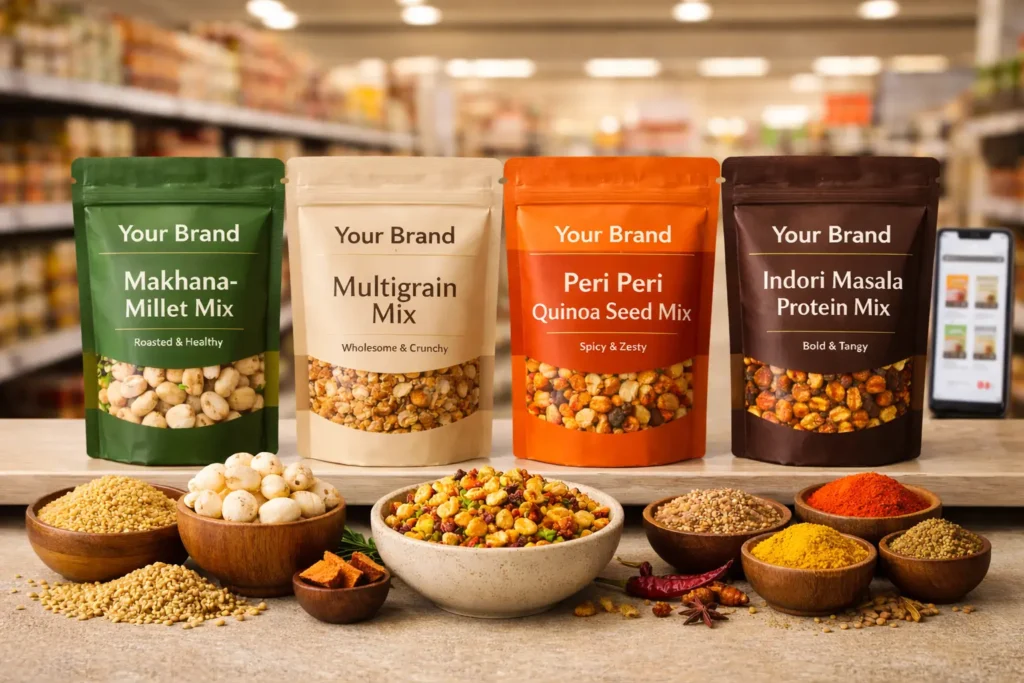
Traditional grains have long been part of everyday diets, but the way consumers want to use them is changing. Modern shoppers often look for products that fit faster routines without losing the familiarity of recognizable ingredients. This creates an opportunity for food brands to give traditional grain-based foods a contemporary identity. Millet mixes private label provides a practical route for transforming familiar grains into convenient, branded products designed for modern consumers.
Why Traditional Grains Are Ready for Reinvention
Traditional grain products can sometimes be associated with lengthy preparation or conventional food formats. Modern consumers, however, increasingly value convenience alongside familiarity.
Brands can bridge this gap by creating products that retain the identity of traditional grains while offering updated formats, flavors, and packaging.
This can include:
- Ready-to-use mixes
- Convenient snack formats
- Seasoned grain combinations
- Portion-friendly packs
- Contemporary product presentations
With millet mixes private label, businesses can build products that connect traditional ingredients with current consumption habits.
Convenience Can Change How Consumers Use Millets
One of the biggest opportunities for millet-based products is simplifying preparation. Consumers may appreciate traditional grains but have limited time to prepare them from scratch.
A thoughtfully developed millet mix can reduce preparation complexity while keeping the core ingredient familiar.
For brands, this creates an opportunity to position millet mixes around practical everyday needs rather than relying solely on traditional food messaging.
The result can be a product that feels familiar yet fits naturally into a modern kitchen.
Modern Flavors Can Refresh Familiar Ingredients
Traditional grains do not have to remain limited to traditional flavor profiles. Brands can experiment with seasoning combinations that appeal to contemporary tastes.
Potential directions include:
- Herbs and spices
- Tangy seasoning blends
- Savory regional flavors
- Mild spice profiles
- International-inspired combinations
Millet mixes private label allows businesses to develop flavor concepts that give traditional grains a fresh identity while maintaining the ingredient’s recognizable character.
Packaging Can Reposition Traditional Foods
Packaging plays an important role in changing how consumers perceive a product.
A traditional grain product presented in modern, informative, and convenient packaging can appeal to consumers who may not normally purchase conventional grain products.
Brands can consider packaging based on:
- Usage occasion
- Portion requirements
- Storage convenience
- Retail shelf presentation
- E-commerce shipping
A strong packaging strategy can make millet mixes private label products more approachable for younger and convenience-focused consumers.
Create Products Around Modern Eating Habits
Consumers today may eat meals at different times and in different locations. Breakfast can happen quickly before work, lunch may be carried to an office, and dinner preparation may need to fit around busy schedules.
Millet mixes can be developed around these changing routines.
For example, a brand could create products positioned for:
- Quick breakfasts
- Convenient lunches
- Easy family meals
- Evening preparation
- On-the-go consumption
This makes the product relevant to how people actually eat today.
Combining Multiple Grains Creates Product Differentiation
A millet mix does not necessarily have to rely on a single grain. Brands can explore combinations with other grains, pulses, seeds, spices, or complementary ingredients depending on the intended product.
Such combinations can create differences in texture, appearance, flavor, and culinary use.
Through millet mixes private label, brands can develop their own product combinations instead of competing solely on a standard commodity-style offering.
Health Positioning Needs Responsible Communication
Millets are often associated with nutrition-focused eating, which can create strong opportunities for health-oriented brands. However, businesses should avoid making unsupported health claims.
Instead, brands can focus on transparent ingredient communication and accurate nutritional information.
Clear product communication can help consumers understand what they are purchasing without relying on exaggerated promises.
For millet mixes private label, responsible positioning can strengthen long-term brand credibility.
Private Label Allows Brands to Build Their Own Identity
Using a private label model means the product is sold under the brand’s own identity rather than the manufacturer’s consumer brand.
This gives businesses greater control over:
- Brand name
- Packaging design
- Product positioning
- Flavor direction
- Target audience
- Retail strategy
The manufacturer handles the production side while the brand focuses on creating customer recognition.
Retailers Can Use Millet Mixes to Refresh Their Categories
Retailers are continually looking for products that bring something different to their shelves.
Modern millet mixes can offer an alternative to conventional grain products while fitting into wellness, convenience, and better-for-you food categories.
A retailer could introduce multiple varieties under one private label collection, creating a recognizable subcategory within its broader food portfolio.
This gives millet mixes private label potential beyond specialist health-food stores.
E-Commerce Creates New Opportunities
Online shopping allows brands to explain unfamiliar products more effectively. Product pages can provide preparation information, ingredient details, serving suggestions, and recipe ideas.
This can be particularly useful when introducing modern versions of traditional foods to consumers who may not have used millet regularly.
A strong online presence can therefore complement private label product development and help brands educate customers while building demand.
Product Development Can Start With a Clear Consumer Problem
Successful modernization should begin with a customer need.
Instead of asking, “How can we sell more millet?” brands can ask:
“What problem can a millet-based product solve for today’s consumer?”
The answer might involve faster preparation, simpler meal planning, convenient portions, new flavors, or easier access to traditional ingredients.
This problem-first approach can make millet mixes private label development more purposeful.
Small Product Concepts Can Become Larger Portfolios
A brand does not need to launch a large range immediately. It can begin with one or two focused products and evaluate consumer response.
Successful products can later expand into:
- New flavors
- Different pack sizes
- Additional grain combinations
- Retail-specific formats
- Seasonal variations
This creates a gradual path toward portfolio expansion while allowing brands to learn from actual market performance.
Manufacturing Flexibility Supports Modernization
Developing a contemporary grain product requires more than choosing the right ingredients. Production needs to consistently reproduce the intended product characteristics.
A capable private label manufacturer can support formulation, processing, packaging, and production requirements according to the brand’s specifications.
This allows businesses to concentrate on market positioning while relying on established manufacturing capabilities.
Turning Traditional Grains Into Modern Brand Experiences
Modernizing traditional grain-based foods does not mean abandoning their identity. It means presenting familiar ingredients in ways that fit current lifestyles.
Millet mixes private label gives brands the opportunity to combine traditional grains with contemporary flavors, convenient formats, modern packaging, and focused consumer positioning.
For businesses looking to enter the growing better-for-you and convenience food categories, millet mixes can become more than a traditional ingredient. They can become the foundation for a distinctive, adaptable, and commercially relevant product portfolio.
How Annakosha Pvt. Ltd. Can Help? (50 Words)
Annakosha Pvt. Ltd. helps brands modernize millet-based products through customized formulations, ingredient combinations, flavor development, scalable manufacturing, and flexible packaging. Our production expertise supports businesses from product concept to finished product, enabling them to create convenient millet mixes with consistent quality, contemporary positioning, and formats suited to evolving retail and consumer needs.
FAQs
1. What are millet mixes private label products?
Millet mixes private label products are millet-based food products manufactured by a third party and sold under a brand’s own name and packaging.
2. How can millet mixes modernize traditional grain-based foods?
Brands can introduce convenient formats, contemporary flavors, practical packaging, and simplified preparation options while retaining millet as the core ingredient.
3. Can brands customize millet mix formulations?
Yes. Depending on the manufacturer, brands can customize ingredient combinations, flavors, product specifications, packaging, and other requirements.
4. Are millet mixes suitable for modern retail?
Yes. Convenient millet products can fit wellness, convenience, specialty food, and better-for-you product categories across modern retail channels.
5. Can millet mixes be sold through e-commerce?
Yes. E-commerce provides an opportunity to explain preparation methods, ingredients, product benefits, and usage occasions directly to potential customers.
6. Why is packaging important for millet mixes?
Modern packaging can improve shelf appeal, communicate product information, support convenience, and help traditional ingredients appear more relevant to contemporary shoppers.
7. Is millet mix private labeling suitable for new food brands?
Yes. Private label manufacturing can allow emerging brands to develop their own millet products without establishing and managing a complete manufacturing facility.
