
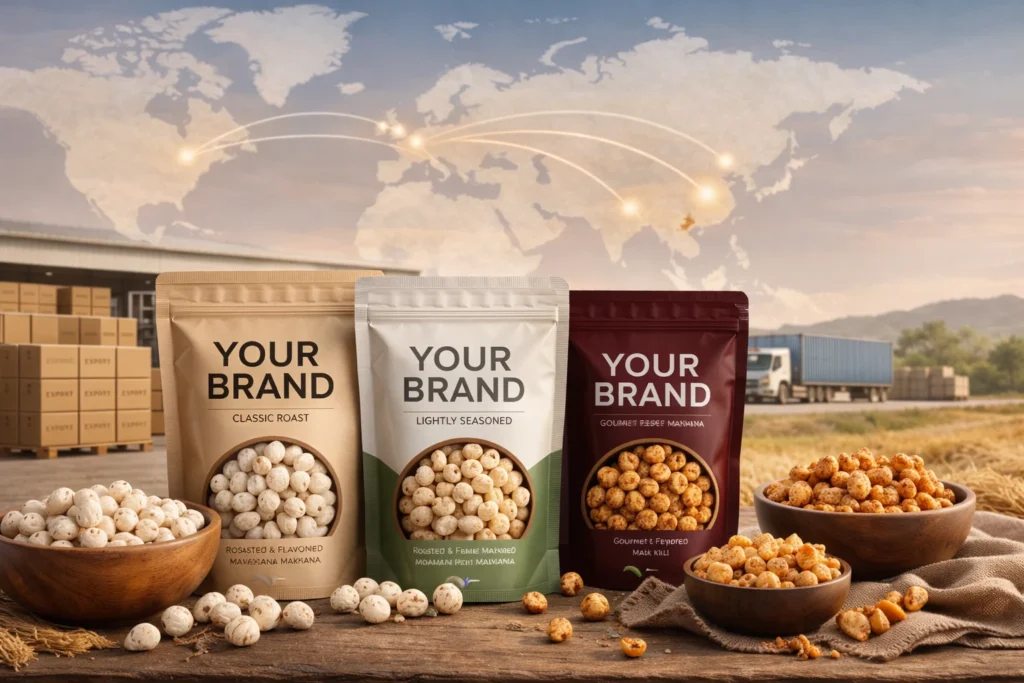
As makhana becomes increasingly relevant in the U.S. snack market, food businesses need more than a promising product category. They need dependable access to the raw material and finished products required to maintain regular operations. For growing brands, restaurants, distributors, retailers, and snack companies, inconsistent supply can create inventory gaps and limit expansion. Makhana wholesale USA gives businesses a practical sourcing route for accessing larger quantities while planning their supply around changing demand.
Why Scalable Makhana Supply Matters
A business may begin by purchasing relatively small quantities while testing consumer demand. As sales increase, however, the same sourcing model may no longer be sufficient.
Higher demand can create new requirements for:
- Larger order quantities
- Reliable replenishment
- Consistent product specifications
- Better inventory planning
- Regular production schedules
A structured makhana wholesale USA supply strategy can help businesses prepare for these changing requirements instead of repeatedly searching for suppliers as demand grows.
Bulk Sourcing Can Improve Purchasing Efficiency
Buying larger quantities can make procurement more organised. Instead of placing frequent small orders, businesses can plan purchases according to expected sales and inventory requirements.
This approach can help companies establish a clearer purchasing cycle.
For example:
Demand Forecast → Purchase Planning → Bulk Supply → Inventory Management → Replenishment
With makhana wholesale USA, food businesses can build procurement plans around their expected volumes rather than treating every purchase as an individual transaction.
Retailers Need Reliable Product Availability
Retail businesses depend on maintaining sufficient inventory. An empty shelf can mean a missed sale and may encourage customers to choose an alternative product.
For retailers selling makhana, dependable supply becomes particularly important when products begin gaining repeat customers.
Wholesale sourcing can help businesses plan stock levels based on:
- Store demand
- Promotional activity
- Seasonal sales
- Distribution schedules
- Reorder cycles
A reliable makhana wholesale USA partner can therefore become an important part of maintaining product availability.
Supporting Distributors With Larger Requirements
Distributors often serve several retailers or sales channels simultaneously. Their purchasing requirements can therefore be considerably larger than those of an individual store.
As distribution networks expand, businesses need suppliers capable of handling increased volume without creating unnecessary disruption.
Makhana wholesale USA can support distributors by creating a more structured approach to bulk procurement and inventory planning.
This can make it easier to coordinate supply across multiple customers and locations.
Different Businesses Have Different Makhana Requirements
Not every buyer needs the same product.
A retailer may require finished, packaged snacks, while a food manufacturer may require bulk makhana for further processing. A distributor may prioritise specific packaging configurations or larger commercial quantities.
Wholesale sourcing can be structured around the requirements of different business models.
Potential buyers include:
- Snack brands
- Retailers
- Distributors
- Food manufacturers
- Speciality food businesses
- E-commerce sellers
This versatility makes makhana wholesale USA relevant across multiple segments of the food industry.
Consistent Specifications Simplify Operations
When businesses source from multiple suppliers, product specifications can vary. Differences in size, appearance, texture, or other characteristics can complicate production and quality management.
Working with an established wholesale supplier can help businesses define clearer purchasing specifications.
Consistent requirements can make it easier to manage:
- Product development
- Production planning
- Quality checks
- Packaging
- Customer expectations
For growing businesses, consistency becomes increasingly important as order volumes increase.
Wholesale Supply Can Support Product Portfolio Expansion
A business that successfully sells one makhana product may eventually want to introduce additional flavours, formats, or pack sizes.
Portfolio expansion can increase the overall quantity of makhana required.
A scalable wholesale supply relationship can help businesses support this growth without repeatedly changing their sourcing strategy.
For example, a brand could begin with one flavour and gradually expand into several varieties while maintaining a coordinated supply process.
Inventory Planning Becomes More Important as Sales Grow
Growing sales create a balancing challenge. Too little inventory can result in stockouts, while excessive inventory can tie up working capital.
Wholesale procurement should therefore be connected to demand forecasting and sales planning.
Businesses can monitor historical sales and estimate upcoming requirements before placing larger orders.
This makes makhana wholesale USA more than a purchasing decision. It becomes part of a broader inventory management strategy.
Supporting E-Commerce Snack Businesses
Online snack brands can experience rapid changes in demand due to promotions, marketplace visibility, advertising campaigns, and seasonal activity.
A sudden increase in orders can quickly affect inventory levels.
Wholesale sourcing gives e-commerce businesses an opportunity to plan supply before promotional periods and maintain sufficient stock for customer orders.
This is particularly useful for brands selling through multiple online platforms.
Seasonal Demand Requires Forward Planning
Certain periods can generate higher snack consumption. Businesses may also experience demand increases during promotional campaigns, holidays, or product launches.
Waiting until inventory becomes low can create unnecessary supply pressure.
Instead, businesses can estimate future requirements and arrange wholesale procurement in advance.
A planned makhana wholesale USA strategy can therefore help food businesses prepare for fluctuations instead of reacting to them at the last minute.
Wholesale Sourcing Can Support Business Predictability
Predictability is valuable for growing food businesses. When supply is uncertain, production and sales planning become more difficult.
A dependable wholesale relationship can provide greater visibility into procurement schedules, expected quantities, and replenishment requirements.
This can allow businesses to coordinate purchasing with:
- Sales forecasts
- Production plans
- Warehouse capacity
- Distribution schedules
- Marketing campaigns
Better coordination can make overall operations more manageable.
From Initial Orders to Larger Supply Requirements
Many food businesses begin cautiously. They may order smaller quantities while testing the market and gradually increase volumes as customer demand becomes clearer.
The ability to move from smaller requirements toward larger wholesale purchases can support this progression.
A suitable makhana wholesale USA supplier should therefore be capable of understanding changing requirements rather than focusing only on one-time transactions.
Choosing a Wholesale Partner Carefully
Price is only one factor when evaluating a wholesale makhana supplier. Businesses should also consider product consistency, supply capability, communication, packaging requirements, quality systems, lead times, and the ability to support increasing volumes.
A supplier that fits the business today but cannot support future requirements may create operational challenges later.
The right wholesale relationship should therefore be evaluated with both current and future demand in mind.
Building a Scalable Makhana Supply Strategy
Makhana can become a valuable part of a growing snack portfolio, but commercial success requires a supply structure that can keep pace with demand.
Makhana wholesale USA gives food businesses an opportunity to organise bulk sourcing, improve inventory planning, support distribution, and prepare for larger sales volumes.
Whether the buyer is a retailer, distributor, online brand, or food business, scalable sourcing can provide the foundation needed to turn growing product demand into sustainable commercial operations.
How Annakosha Pvt. Ltd. Can Help? (50 Words)
Annakosha Pvt. Ltd. supports businesses with reliable makhana sourcing, bulk supply, customised processing, quality-focused production, and flexible packaging solutions. Our scalable capabilities help retailers, distributors, and snack brands manage growing requirements efficiently while maintaining product consistency, organised supply planning, and dependable support for expanding domestic and international markets.
FAQs
1. What does makhana wholesale USA mean?
Makhana wholesale USA refers to sourcing makhana in commercial quantities for businesses operating in or supplying the U.S. market.
2. Who can purchase makhana wholesale?
Retailers, distributors, snack brands, food manufacturers, e-commerce businesses, and other commercial food companies can purchase makhana wholesale based on their requirements.
3. Why is scalable makhana supply important?
Scalable supply helps businesses increase purchasing volumes as sales grow while reducing the risk of inventory shortages and supply interruptions.
4. Can wholesale makhana be used for private label products?
Yes. Businesses can source makhana for private label snack production, depending on the supplier’s manufacturing and customisation capabilities.
5. How should businesses plan wholesale makhana purchases?
Businesses should consider sales forecasts, existing inventory, lead times, promotional activity, seasonal demand, and expected future growth when planning purchases.
6. What should businesses consider when choosing a makhana wholesaler?
Important factors include product quality, consistency, supply capacity, packaging options, communication, lead times, quality systems, and the supplier’s ability to support larger future requirements.
7. Can makhana wholesale support e-commerce brands?
Yes. Wholesale sourcing can help online brands maintain sufficient inventory during product launches, promotions, seasonal demand, and periods of increased marketplace sales.
