
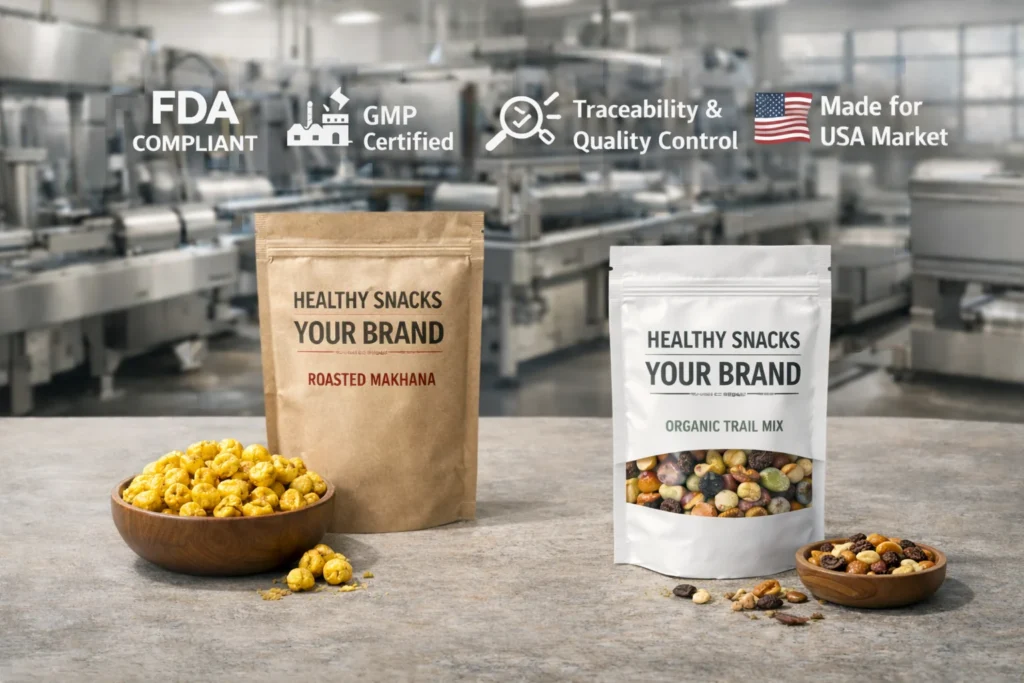
A successful snack product usually begins with understanding what people actually want to eat. Consumers differ in their flavour preferences, eating occasions, ingredient expectations, packaging choices, and willingness to pay. For food brands, these insights can become valuable product-development opportunities when translated into the right snack concepts. Healthy snacks private label gives businesses a practical way to convert consumer observations into branded products without taking on the complexity of building their own manufacturing infrastructure.
Consumer Insights Should Guide Product Development
A snack idea becomes more valuable when it addresses a recognisable consumer need. Instead of developing products based only on assumptions, brands can study purchasing behaviour, customer feedback, online reviews, and emerging preferences.
These insights can reveal opportunities such as:
- Demand for convenient snacks
- Interest in recognisable ingredients
- Preference for different flavour profiles
- Growing interest in portion-controlled products
- Demand for premium packaging
With healthy snacks private label, brands can use these insights to shape products around specific customer expectations.
Identify the Right Snacking Occasion
Consumers do not eat every snack for the same reason. A product purchased for an office break may have different requirements from one purchased for travel, family sharing, or evening consumption.
Understanding the occasion can help brands determine the appropriate product format, pack size, flavour, and positioning.
For example, a brand targeting office workers might prioritise convenient individual packs, while a family-focused product could use larger formats.
This makes healthy snacks private label useful for creating products designed around real consumption situations.
Turn Feedback Into Product Ideas
Customer feedback can provide valuable clues for product development. Comments about flavour, packaging, texture, portion size, or convenience can reveal opportunities that may not be obvious from market research alone.
Brands can organise this feedback into product-development priorities.
A private label manufacturing partner can then help translate those priorities into practical product specifications.
This creates a useful development cycle:
Consumer insight → Product concept → Sample → Feedback → Refinement → Launch
Flavor Can Become a Competitive Advantage
Healthy positioning alone may not make a snack successful. Taste remains an important part of the customer experience.
Brands can use consumer preferences to determine which flavors deserve attention.
Potential flavor directions may include:
- Savory combinations
- Spicy profiles
- Tangy seasonings
- Herb-inspired blends
- International flavor concepts
Through healthy snacks private label, businesses can develop flavor collections that reflect the preferences of their intended audience rather than relying on generic product concepts.
Packaging Should Match Consumer Behaviour
Packaging influences how customers perceive and use a snack. A product designed for busy professionals may need convenient single-serving packaging, while a family product may benefit from a larger format.
Brands can use consumer insights to decide:
- Pack size
- Format
- Visual identity
- Product information
- Portability
Healthy snacks private label allows businesses to coordinate product development with customised packaging so the final product matches its intended market.
Premium Positioning Requires More Than a Higher Price
A premium snack should communicate value through the entire product experience.
Consumers may associate premium value with factors such as product quality, distinctive flavours, thoughtful packaging, ingredient transparency, and consistent presentation.
Private label manufacturing can help brands combine these elements into a cohesive product concept.
The goal is not simply to charge more. It is to create a product that gives consumers a clear reason to choose it.
Build Products Around Specific Audiences
A broad target audience can make product development difficult. Brands may achieve better differentiation by focusing on a clearly defined customer segment.
For example, a company could develop healthy snacks for:
- Busy professionals
- Fitness-oriented consumers
- Families
- Students
- Frequent travelers
- Premium food shoppers
Healthy snacks private label enables brands to create products with specific audiences in mind, helping their packaging, flavours, messaging, and product formats work together.
Private Label Makes Testing More Practical
Not every product idea will succeed. Brands therefore need a way to test concepts before committing significant resources.
Private label manufacturing can provide a more flexible route for launching selected products and evaluating market response.
Businesses can monitor:
- Customer reviews
- Repeat purchases
- Sales performance
- Flavor popularity
- Channel performance
The strongest products can then become candidates for broader distribution.
Manufacturing Flexibility Supports Portfolio Development
Consumer preferences are constantly changing. A snack brand that offers only one product may have fewer opportunities to respond to new demand.
A flexible manufacturing relationship can support the development of multiple products over time.
For example, a business could introduce one core snack and later expand into additional flavours, pack sizes, or related categories.
This makes healthy snacks private label valuable for businesses that want to build a portfolio rather than depend on a single product.
Control Costs While Building the Brand
Developing a manufacturing facility requires capital and operational resources. Emerging brands may prefer to invest those resources into activities that directly generate market visibility and customer demand.
Private label production allows businesses to access established manufacturing capabilities without managing every part of the production infrastructure themselves.
This can help brands allocate more attention toward:
- Marketing
- E-commerce
- Retail relationships
- Sales
- Customer research
Consistency Turns First Purchases Into Repeat Purchases
A strong product concept can attract a first purchase, but consistency can influence whether customers buy again.
The product should maintain reliable flavour, texture, appearance, and packaging quality across batches.
A structured healthy snacks private label manufacturing process can help brands establish defined product specifications and repeatable production procedures.
This becomes increasingly important when a successful product moves into larger retail networks.
From Consumer Insight to Commercial Opportunity
Consumer research becomes commercially useful when brands can turn observations into products that customers genuinely want.
Healthy snacks private label provides a bridge between product ideas and commercial manufacturing. Brands can use consumer insights to define their target audience, select appropriate formats, develop flavours, customise packaging, test concepts, and eventually scale successful products.
This approach allows businesses to build snack ranges based on customer needs rather than simply following crowded market trends.
How Annakosha Pvt. Ltd. Can Help? (50 Words)
Annakosha Pvt. Ltd. helps brands turn consumer insights into healthy snack products through customised formulations, flavour development, scalable manufacturing, quality-focused production, and flexible packaging. We support businesses from product concept to commercial production, helping them create differentiated snack ranges while managing manufacturing complexity and maintaining consistent quality across growing markets.
FAQs
1. What does healthy snacks private label mean?
Healthy snacks private label allows businesses to develop and sell snack products under their own brand while a specialised manufacturer manages production.
2. How can consumer insights improve snack product development?
Consumer insights can help brands understand preferred flavours, formats, ingredients, price expectations, and eating occasions, allowing them to develop products with a clearer market purpose.
3. Can private label manufacturers customise healthy snack products?
Yes. Depending on the manufacturer, businesses can customise formulations, flavours, pack sizes, packaging, and other product specifications.
4. Is healthy snacks private label suitable for new brands?
Yes. It can help emerging brands access manufacturing capabilities without investing heavily in their own production infrastructure.
5. How can brands test a new healthy snack idea?
Brands can develop initial products, launch them through selected channels, collect customer feedback, and evaluate sales before expanding successful products.
6. Why is consistency important for private label snacks?
Consistent flavour, texture, appearance, and packaging help create a predictable customer experience and can support repeat purchases as the brand grows.
