
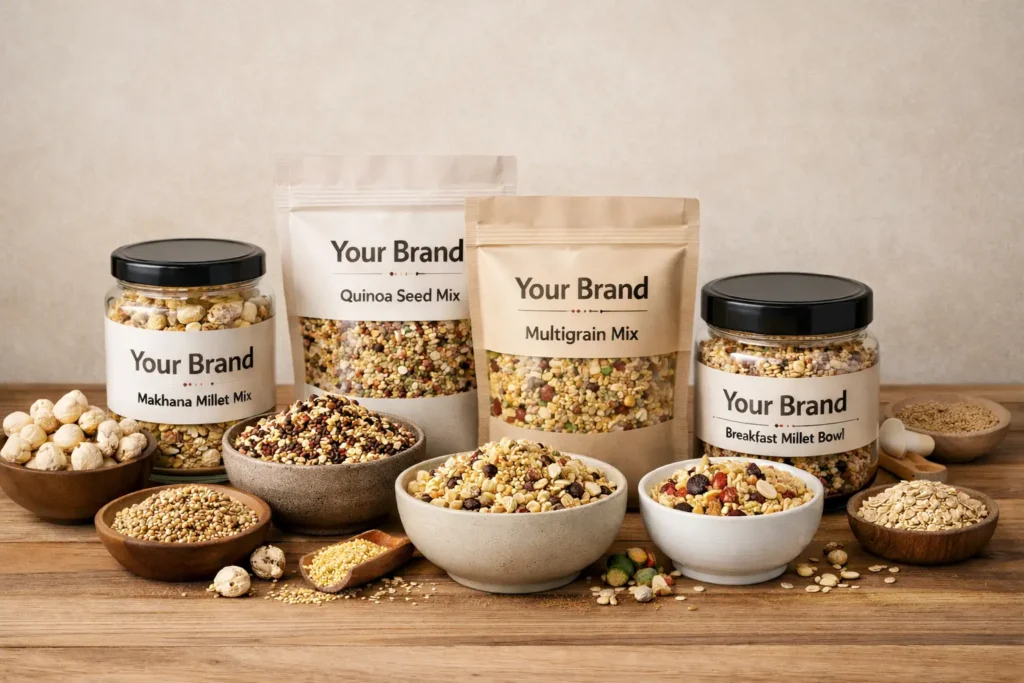
India has a long history of using grains such as millet in everyday food preparation. As international consumers explore more diverse snack choices, this traditional ingredient base creates an opportunity for Indian food manufacturers to develop products for global markets. A millet snack exporter India can connect this grain expertise with modern snack formats, helping international brands discover products that combine Indian sourcing knowledge with contemporary consumer expectations.
Why Indian Millet Expertise Matters
India has extensive experience with millet cultivation, processing, and food applications. This provides a strong foundation for businesses developing millet-based snacks for international markets.
However, exporting a successful snack involves more than having access to grains. Products must also be developed around:
- Consistent specifications
- Appropriate processing
- Flavor development
- Packaging requirements
- Commercial production
- Export documentation
A capable millet snack exporter India can bring these elements together within a structured supply process.
Global Consumers Want More Variety
Snack aisles around the world are becoming more diverse. Consumers are exposed to ingredients and flavours from different regions through retail, travel, social media, and e-commerce.
This creates space for Indian-origin grain products to move beyond traditional food categories.
Millet snacks can offer brands a way to introduce an ingredient with a distinct cultural connection while presenting it in a format that fits modern snacking habits.
Turning Millet Into Contemporary Snacks
Global consumers may not always be familiar with traditional millet preparations. Modern snack formats can make the ingredient more accessible.
Brands can explore products such as:
- Seasoned millet snacks
- Roasted grain combinations
- Millet-based mixes
- Flavored snack blends
- Convenient ready-to-eat formats
A millet snack exporter India can help translate traditional grain knowledge into commercially suitable snack products.
Flavor Development Can Localize Indian Ingredients
One challenge in international markets is making a product appealing to local taste preferences.
Indian manufacturing expertise can provide a strong starting point, while flavor development can adapt products for different audiences.
Depending on the target market, brands may explore savory, spicy, tangy, herb-inspired, or internationally influenced flavor profiles.
This creates opportunities for Indian millet snacks to serve both consumers looking for authentic ingredients and shoppers interested in new taste experiences.
Export Products Need Consistent Quality
Global retail buyers typically expect products to maintain consistent characteristics across production batches.
Variations in flavor, texture, appearance, or packaging can affect customer experience and brand perception.
A professional millet snack exporter India should therefore maintain defined product specifications and quality-focused production procedures.
Consistency becomes particularly important when a product moves from an initial market test to larger international orders.
Packaging Must Work Across Borders
Packaging is another important part of international snack development. A product intended for overseas markets may need packaging that supports transportation, storage, shelf presentation, and consumer communication.
Brands may need to consider:
- Pack sizes
- Material selection
- Product information
- Labeling requirements
- Retail presentation
- Shipping durability
Export-oriented private label manufacturing can help coordinate these requirements with the finished snack.
Private Label Creates Global Branding Opportunities
International buyers do not always want to sell products under an existing manufacturer’s brand. Many prefer to build their own consumer identity.
Private label manufacturing allows businesses to source millet snacks and sell them under their own brand name.
The manufacturer can focus on production while the brand manages:
- Marketing
- Positioning
- Distribution
- Retail relationships
- Customer engagement
This makes a millet snack exporter India particularly relevant for international businesses looking to introduce Indian grain-based products under their own identity.
Supporting Different Market Positions
Millet snacks can be developed for different commercial segments.
A brand might position its product toward premium consumers, everyday snack shoppers, wellness-focused audiences, or consumers interested in international flavors.
The product formulation, packaging, and messaging can then be aligned with the selected segment.
This flexibility gives brands more opportunities to create differentiated products instead of competing only through price.
E-Commerce Is Expanding Product Discovery
Online retail has made it easier for consumers to discover products from different countries.
For Indian millet snack exporters, this creates opportunities to reach customers beyond traditional distribution networks.
E-commerce brands can introduce products through specialized food websites, marketplaces, and direct-to-consumer stores.
Product pages can also explain ingredients, preparation, sourcing, and flavor characteristics, making unfamiliar millet products easier for international consumers to understand.
Export Scalability Supports Long-Term Growth
An initial export order may be relatively small. If customers respond positively, future requirements can increase significantly.
This creates a need for manufacturing systems that can accommodate changing volumes.
A scalable millet snack exporter India can help brands move from product testing toward larger commercial requirements without completely redesigning their supply process.
Scalability can become especially important when products enter multiple retailers or geographic markets.
Understanding the Destination Market
A successful export strategy should begin with the target market rather than assuming that one product will perform equally everywhere.
Brands should evaluate:
- Consumer preferences
- Flavor expectations
- Pack sizes
- Pricing
- Retail channels
- Applicable labelling requirements
The manufacturer can then work with the brand to develop products that are better aligned with the intended market.
Indian Grain Expertise Can Become a Brand Story
Origin can contribute to a product’s identity when communicated accurately and responsibly.
For some brands, the connection to Indian grains can become part of their storytelling strategy.
This could focus on traditional grain heritage, ingredient familiarity, regional food culture, or the transformation of traditional ingredients into contemporary snacks.
A millet snack exporter India can therefore contribute not only manufacturing capabilities but also valuable ingredient and product knowledge.
Building Relationships Beyond a Single Shipment
Export growth is easier to manage when the supplier relationship is designed for continuity.
Instead of treating each order as a separate transaction, brands can establish structured processes for forecasting, production planning, quality checks, packaging, and replenishment.
This approach can improve communication and make future international orders more predictable.
For growing snack brands, a dependable manufacturing relationship can become an important part of long-term supply planning.
Why Brands Can Look to India for Millet Snacks
India offers a combination of grain familiarity, food-processing experience, manufacturing capabilities, and established knowledge of millet-based foods.
When these strengths are combined with modern product development and export-focused quality systems, they can create opportunities for international snack businesses.
A millet snack exporter India can serve as the connection between India’s traditional grain expertise and the changing needs of global snack consumers.
How Annakosha Pvt. Ltd. Can Help? (50 Words)
Annakosha Pvt. Ltd. helps international brands source millet snacks from India through customised product development, flavour innovation, scalable manufacturing, quality-focused processing, and export-ready packaging. Our expertise supports businesses seeking reliable Indian grain solutions while developing differentiated snack products suited to international retail, e-commerce, and evolving consumer preferences across global markets.
FAQs
1. What does millet snack exporter India mean?
A millet snack exporter in India is a food manufacturer or supplier that develops and supplies millet-based snack products for international markets.
2. Why is India suitable for millet snack production?
India has extensive experience with millet cultivation, processing, traditional food applications, and increasingly modern millet-based product development.
3. Can international brands source private label millet snacks from India?
Yes. International brands can work with Indian manufacturers to develop products that are packaged and sold under their own brand identity.
4. Can millet snack flavours be customised for different countries?
Yes. Brands can explore flavour profiles based on the preferences of their target consumers and destination markets.
5. What should brands consider before exporting millet snacks?
Brands should evaluate product specifications, packaging, labelling, quality requirements, shipping conditions, target-market preferences, and applicable import regulations.
6. Can a millet snack exporter in India support large orders?
A manufacturer with scalable production capabilities can support increasing order volumes, subject to product specifications, capacity, and commercial requirements.
7. Are millet snacks suitable for international retail?
Yes. Modern millet snack formats can be developed for supermarkets, speciality stores, e-commerce platforms, and other international retail channels.
