
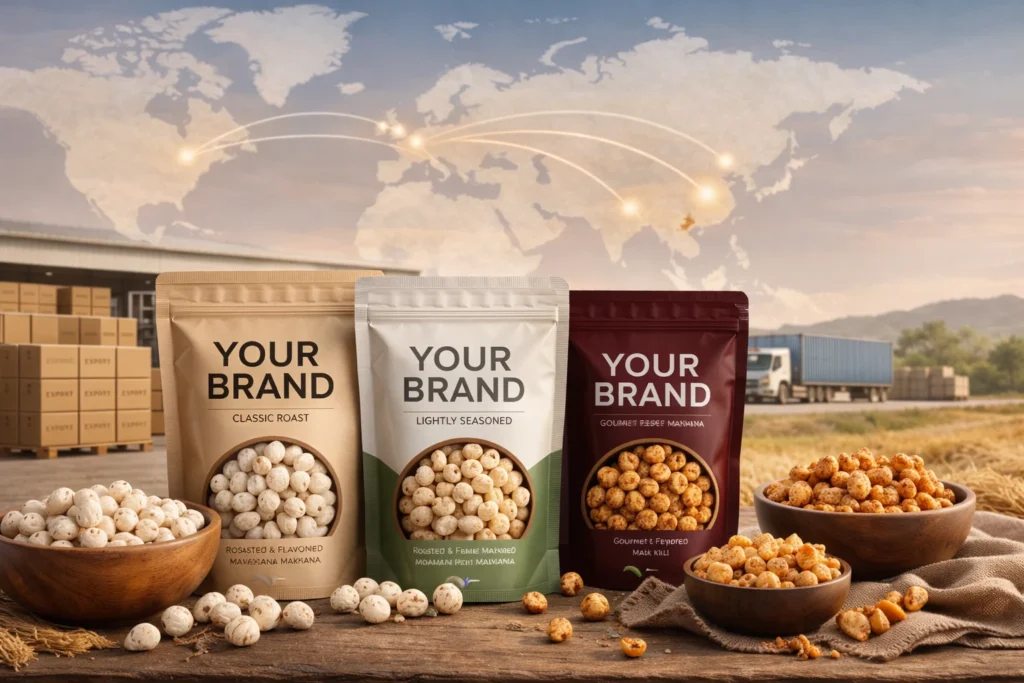
Systems Matter More Than Product Ideas
In the snack industry, product ideas are easy to copy. Execution systems are not. When brands rely on informal sourcing, manual processes, or untested suppliers, every production run becomes a risk.
System-driven brands build repeatability into:
-
Ingredient sourcing
-
Manufacturing workflows
-
Quality assurance
-
Packaging standards
-
Supply timelines
This consistency is what investors, retailers, and distributors trust.
Manufacturing Systems Reduce Early-Stage Risk
When you start a snack brand USA, manufacturing is the biggest operational risk. In-house production requires equipment, trained labor, certifications, and regulatory oversight—often before demand is proven.
Private label manufacturing replaces uncertainty with proven systems:
-
Validated production processes
-
Standardized quality controls
-
Tested shelf-life stability
-
Predictable cost structures
Instead of learning through costly mistakes, brands inherit operational discipline from day one.
Compliance Is a System, Not a Checkbox
Many new brands treat compliance as paperwork. In reality, compliance is an operating system that governs how products are produced, labeled, stored, and shipped.
System-based snack brands:
-
Build compliance into production
-
Maintain batch-level traceability
-
Standardize nutritional labeling
-
Prepare documentation proactively
This approach avoids last-minute delays, rejected shipments, and retailer rejections.
Scaling Requires Structure, Not Hustle
Early sales success often tempts founders to scale fast—but scaling without systems breaks brands. More orders amplify every inefficiency.
Brands that start a snack brand USA with systemized private labeling can:
-
Increase volume without operational chaos
-
Add SKUs without redesigning processes
-
Maintain consistency across markets
-
Control margins as production grows
Growth becomes linear, not stressful.
Cost Predictability Protects Brand Longevity
Guesswork-driven brands struggle with pricing because costs fluctuate unpredictably. Equipment repairs, labor turnover, and raw material volatility erode margins.
System-driven private labeling converts manufacturing into:
-
Transparent per-unit pricing
-
Volume-based cost optimization
-
Reduced waste and downtime
-
Stable margin planning
This financial clarity allows brands to price confidently and reinvest strategically.
Retail and Distribution Favor Systemized Brands
Retail buyers do not invest in potential—they invest in reliability. Brands that start a snack brand USA using structured manufacturing systems are easier to onboard.
Retail readiness depends on:
-
Consistent product specs
-
On-time fulfillment
-
Scalable supply
-
Professional documentation
Private label systems signal operational maturity even for young brands.
Brand Teams Should Build Demand, Not Factories
The highest-value activities in the snack business are branding, marketing, and distribution—not production management.
System-based private labeling allows founders to:
-
Focus on customer acquisition
-
Optimize go-to-market strategies
-
Build partnerships faster
-
Iterate branding based on real feedback
Operations run in the background while brands stay market-facing.
How Annakosha Pvt. Ltd. Can Help?
Annakosha Pvt. Ltd. helps brands start a snack brand USA by providing system-driven private label manufacturing, regulatory-ready processes, and scalable production frameworks. We replace guesswork with consistency, enabling brands to launch confidently, grow predictably, and scale without operational disruption.
FAQs
1. Why do most snack startups fail in the USA?
Lack of systems—especially in production, compliance, and cost control—causes early-stage instability.
2. What systems are essential to start a snack brand USA?
Production standardization, regulatory compliance, predictable costing, and scalable supply chains.
3. Is private labeling better than building my own factory?
Yes, it allows faster launches, lower risk, and built-in scalability.
4. Can system-based brands still innovate?
Absolutely, systems enable safe, controlled innovation without operational chaos.
5. Is private labeling suitable for first-time founders?
Yes, it provides professional-grade infrastructure without requiring manufacturing expertise.
