
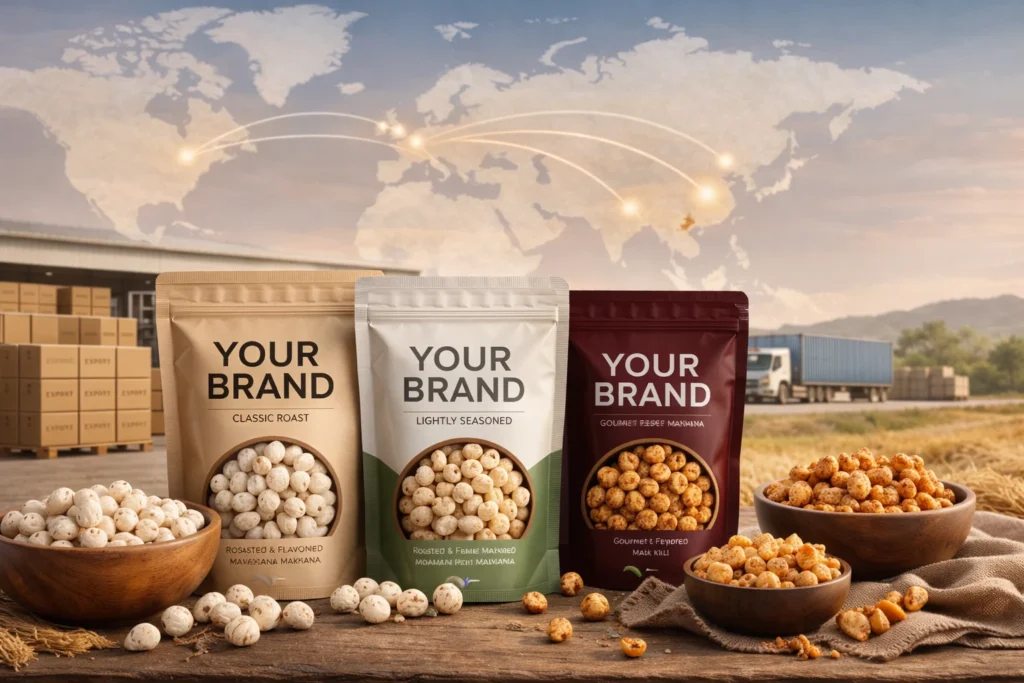
Makhana wholesale USA demand is growing as American retailers expand their better-for-you snack categories. Fox nuts are gaining shelf space due to their clean-label appeal, plant-based positioning, and versatility. Yet, despite rising interest, many brands struggle to convert wholesale supply into retail success.
The challenge is not product quality—it is preparedness. Retail buyers evaluate brands through a commercial lens, not a nutritional one. Brands entering makhana wholesale USA must fix operational, pricing, and compliance gaps before approaching retail shelves, or risk stalled listings and short-lived trials.
Wholesale Readiness Is Not the Same as Retail Readiness
Supplying makhana in bulk does not automatically qualify a brand for retail distribution. Makhana wholesale USA success depends on how well a brand translates bulk efficiency into retail structure.
Brands often overlook:
-
Retail case-pack logic
-
Shelf-facing packaging formats
-
Consistent SKU specifications
Retailers expect systems, not improvisation. Fixing these structural gaps early improves buyer confidence.
Pricing Must Be Designed for Retail Margins
One of the most common failures in makhana wholesale USA is pricing built only around production cost. Retailers work backwards from shelf price, expected margin, and promotional flexibility.
Brands must fix:
-
Wholesale pricing that leaves no margin for distributors
-
Rigid MOQs that block retail pilots
-
No allowance for discounts or promotions
Without margin clarity, even strong products fail buyer reviews.
Packaging Must Support Shelf Performance
In makhana wholesale USA, packaging is a sales tool—not just protection. Retailers assess packaging for clarity, compliance, and shelf impact.
Key fixes include:
-
Retail-appropriate pouch or jar formats
-
Clear nutritional messaging
-
Scannable barcodes and case labeling
Bulk-style or export-only packaging often needs redesign before retail acceptance.
SKU Discipline Builds Retail Confidence
Retail buyers prioritize velocity over variety. Brands entering makhana wholesale USA frequently make the mistake of launching too many SKUs too early.
Brands must fix:
-
Overextended flavor portfolios
-
Inconsistent SKU sizing
-
Unclear hero products
Fewer, well-performing SKUs improve reorder potential and shelf longevity.
Compliance Gaps Can Delay or Kill Listings
Retail compliance is non-negotiable. In makhana wholesale USA, missing or incorrect documentation can delay listings by months.
Brands should fix:
-
Ingredient and allergen declarations
-
Batch traceability systems
Retailers view compliance readiness as a proxy for operational maturity.
Scalable Supply Is a Retail Requirement
Retail buyers evaluate whether a brand can scale beyond initial orders. Makhana wholesale USA partners must demonstrate capacity planning and supply continuity.
Brands need to fix:
-
Single-source dependency risks
-
Manual production constraints
-
Inconsistent lead times
Scalability reassures buyers that growth will not disrupt supply.
Logistics Readiness Drives Reorders
Retail success depends on reliable replenishment. In makhana wholesale USA, brands often underestimate logistics complexity.
Critical fixes include:
-
Predictable export timelines
-
Proper documentation and customs readiness
-
Inventory planning aligned with retail cycles
Smooth logistics improve retailer trust and repeat orders.
How Annakosha Pvt. Ltd. Helps
Annakosha Pvt. Ltd. helps makhana wholesale USA brands transition smoothly into retail by aligning bulk sourcing with compliant packaging, scalable production, margin-ready pricing, and export documentation. Our private label approach reduces operational gaps, enabling brands to meet retail expectations with confidence.
FAQs
1. Why do many makhana brands fail in US retail?
Most makhana brands fail due to incorrect pricing strategies, weak packaging appeal, or regulatory compliance gaps—not because of product quality itself.
2. Is bulk supply enough for retail success?
No, retail success requires structured SKUs, compliant labeling, barcode integration, and logistics systems designed specifically for retail environments.
3. How many SKUs should brands launch initially?
Retail buyers usually prefer a limited number of well-tested SKUs that demonstrate strong sales velocity and consistent consumer demand.
4. What do retailers value most in makhana wholesale USA partners?
Retailers prioritize consistency, clear margins, regulatory compliance, dependable supply continuity, and the ability to scale without disruptions.
5. Can private label manufacturing improve retail readiness?
Yes, private label manufacturing offers standardized production, labeling, and compliance frameworks that significantly reduce scaling and regulatory risks.
