
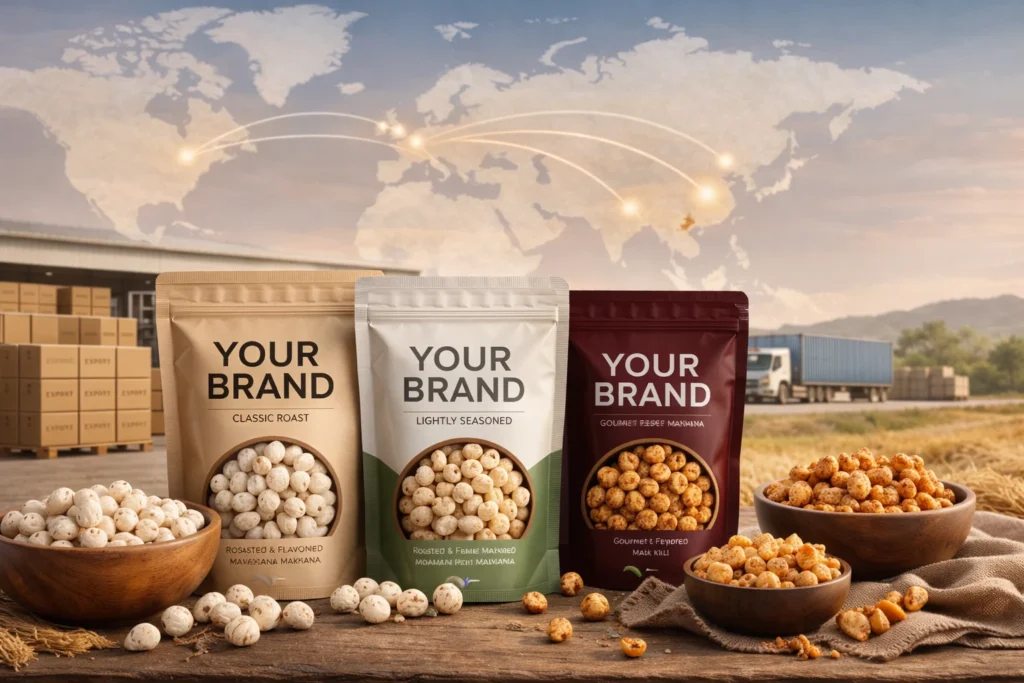
The private label snacks USA market is no longer driven by impulse launches or trend chasing. Retail buyers today operate under intense pressure—limited shelf space, rising compliance standards, and demanding consumers. For new brands entering this space, success depends less on ideas and more on execution readiness.
Retail buyers are not looking for experimentation. They want low-risk partners who can deliver consistency, compliance, and category growth. Understanding these expectations early helps brands avoid rejections, delays, and costly relaunches.
1. Commercial-Ready Products, Not Just Concepts
Retail buyers in the private label snacks USA ecosystem expect products that are already market-ready. This means finalized formulations, stable shelf life, and scalable production—not pilot batches.
A buyer evaluates whether a snack can perform consistently across hundreds of stores. If production processes are unclear or untested at scale, the conversation often ends quickly.
Brands that partner with experienced private label manufacturers gain credibility by presenting finished, validated products instead of prototypes.
2. Regulatory Compliance as a Baseline Requirement
Compliance is not a value-add—it is mandatory. Retail buyers expect full adherence to FDA regulations, nutritional labeling standards, allergen declarations, and traceability documentation.
In the private label snacks USA market, buyers increasingly ask for:
-
Clean ingredient disclosures
-
Verified nutrition panels
-
Shelf-life validation
-
Food safety certifications
Any uncertainty creates risk, and risk reduces buyer confidence. Brands aligned with compliant manufacturing systems move faster through approval cycles.
3. Supply Chain Reliability Over Novelty
Innovative flavors attract attention, but reliability wins contracts. Retail buyers prioritize vendors who can maintain uninterrupted supply, especially during seasonal demand spikes.
In private label snacks USA, supply failures impact retailer reputation directly. Buyers therefore assess:
-
Raw material sourcing stability
-
Production lead times
-
Inventory planning systems
-
Backup manufacturing capabilities
Brands that cannot demonstrate dependable fulfillment often lose opportunities regardless of product quality.
4. Price Structures That Support Retail Margins
Retailers operate on thin margins. Buyers expect transparent pricing models that allow room for promotions, discounts, and long-term profitability.
Private label snacks USA buyers analyze cost structures closely. They look for manufacturers who optimize sourcing, processing, and packaging costs without compromising quality.
Brands that understand retail economics—and align pricing accordingly—are more likely to secure long-term shelf placements.
5. Packaging Designed for Retail Performance
Packaging is evaluated for more than aesthetics. Retail buyers assess functionality, shelf impact, and logistical efficiency.
For private label snacks USA, packaging must:
-
Protect freshness during long distribution cycles
-
Display clean labeling clearly
-
Stack efficiently for warehousing and retail shelving
Retailers prefer packaging formats that reduce damage, minimize returns, and simplify replenishment.
6. Scalable Volume Capability From Day One
Buyers rarely start with small ambitions. Even test launches can scale rapidly if sales perform well. Retailers therefore expect suppliers to be prepared for growth.
In the private label snacks USA market, buyers often ask about:
-
Monthly and annual production capacity
-
Ability to scale without reformulation
-
Consistency across large batch sizes
Manufacturing partners with scalable infrastructure reduce future transition risks for retailers.
7. Category Understanding and Data Awareness
Retail buyers prefer partners who understand category dynamics—not just manufacturing. This includes awareness of consumer trends, portion preferences, and regional buying behavior.
Brands entering private label snacks USA gain advantage when they can discuss:
-
Target consumer segments
-
Price positioning within the category
-
Shelf placement logic
This signals strategic maturity rather than opportunistic entry.
How Annakosha Pvt. Ltd. Helps
Annakosha Pvt. Ltd. supports private label snacks USA brands with compliant manufacturing, scalable production, clean-label formulations, and reliable export-ready supply chains. Our systems are designed to meet retail buyer expectations from day one, reducing launch risk while enabling long-term growth across global markets.
FAQs
1. What do retail buyers look for first in private label snacks USA?
Retail buyers prioritize compliance, supply reliability, and scalable production before evaluating branding or flavor innovation.
2. Is clean labeling mandatory for private label snacks USA?
While not mandatory, clean-label transparency significantly improves buyer acceptance and consumer trust in competitive categories.
3. Can new brands compete with established private labels?
Yes, if they partner with experienced manufacturers who ensure consistency, pricing efficiency, and retail readiness.
4. How important is packaging in buyer decisions?
Extremely important. Buyers assess packaging durability, shelf impact, labeling clarity, and logistical efficiency.
5. Do buyers prefer domestic or international manufacturers?
Buyers prioritize reliability and compliance over geography. Export-ready manufacturers with strong systems are widely accepted.
