
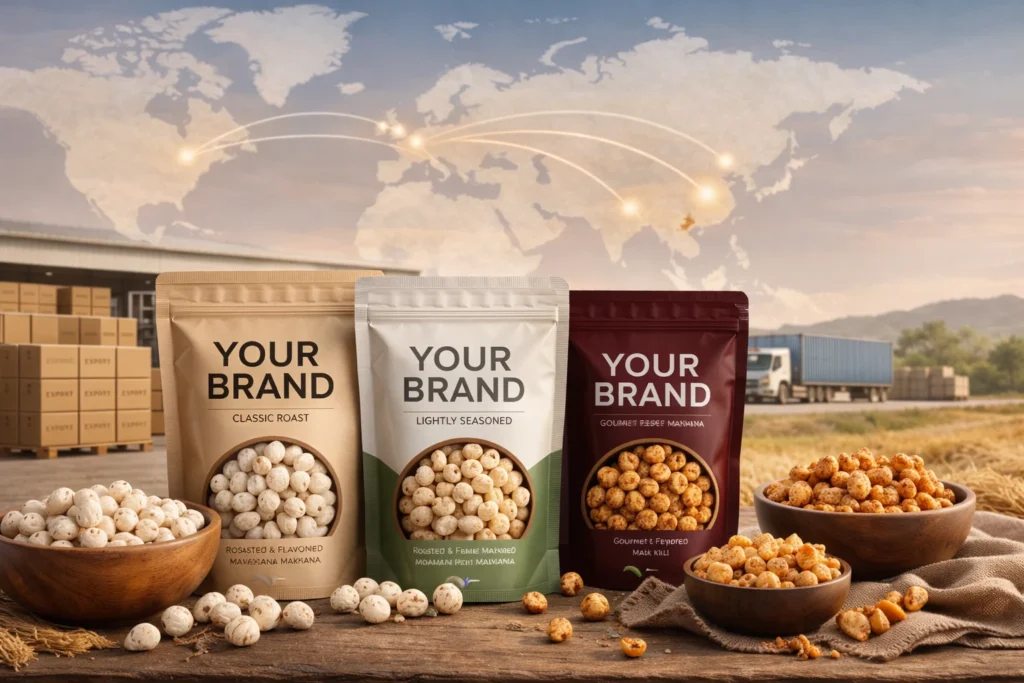
Private label snacks USA offer one of the fastest routes to entering the American snack market—but only when executed correctly. Many brands fail not because of weak demand, but due to avoidable mistakes made during product development, manufacturing selection, and launch planning.
The U.S. snack market rewards speed, consistency, and compliance. Private labeling removes infrastructure barriers, but success depends on how well brands manage execution risks. Below are seven proven ways private label snacks USA help brands launch faster while avoiding costly missteps that derail growth.
1. Avoiding the “Recipe-First” Trap
A common mistake is starting with a recipe before understanding production realities. Many snack concepts fail because they are not scalable or cost-efficient at commercial volumes.
Private label snacks USA providers reverse this risk by:
-
Validating formulations for mass production
-
Aligning ingredients with supply availability
-
Designing products around scalable processes
This ensures speed without reformulation delays.
2. Eliminating Compliance Guesswork
U.S. food regulations are complex. Brands that attempt to interpret labeling, allergen declarations, and safety standards independently often face launch delays.
Private label snacks USA manufacturers already operate within:
-
FDA-aligned production systems
-
Established food safety protocols
-
Labeling-ready frameworks
This prevents regulatory rework that slows market entry.
3. Preventing Supplier Fragmentation
New brands often juggle multiple vendors for ingredients, processing, and packaging—creating coordination errors and timeline overruns.
Private label snacks USA consolidate these steps into a single workflow:
-
Integrated sourcing
-
Standardized processing
-
Coordinated packaging execution
This streamlining reduces launch friction and miscommunication.
4. Controlling Costs Before Scale
Unexpected costs are one of the most damaging mistakes during launch. Equipment trials, wastage, and inefficient batch sizing inflate budgets.
Private label snacks USA models reduce financial risk by offering:
-
Predictable per-unit pricing
-
Volume-based cost efficiencies
-
Lower minimum order barriers
Brands launch with controlled budgets instead of open-ended expenses.
5. Designing Packaging for Speed, Not Just Aesthetics
Packaging errors can stall launches. Overly complex designs, unsuitable materials, or non-compliant labeling lead to reprints and delays.
Private label snacks USA partners help brands:
-
Select production-ready packaging formats
-
Ensure barcode and retail compatibility
-
Optimize shelf-life and logistics handling
Packaging becomes a launch accelerator, not a bottleneck.
6. Testing Market Demand Without Overproduction
Overcommitting to large volumes before demand validation is a costly mistake. Unsold inventory ties up capital and limits flexibility.
Private label snacks USA enable:
-
Small-batch launches
-
Pilot SKUs for eCommerce or regional retail
-
Demand-driven scale-up planning
This allows faster entry with lower downside risk.
7. Avoiding Capacity Constraints During Growth
Many brands launch successfully but fail during growth due to limited manufacturing capacity. Switching manufacturers mid-scale disrupts consistency and timelines.
Private label snacks USA providers plan capacity in advance, offering:
-
Scalable production infrastructure
-
Repeatable quality benchmarks
-
Long-term manufacturing continuity
This prevents growth-stage breakdowns.
How Annakosha Pvt. Ltd. Helps
Annakosha Pvt. Ltd. supports private label snacks USA brands by offering end-to-end manufacturing, compliance-ready systems, scalable capacity, and cost-controlled production. Their structured approach helps brands avoid launch mistakes while entering the U.S. market faster with consistent quality and predictable execution.
FAQs
1. What are private label snacks USA?
They are snack products manufactured by a third party and sold under your own brand name in the U.S. market.
2. Why do brands choose private label snacks USA?
They allow faster launches, lower capital investment, built-in compliance, and scalable production without owning factories.
3. Can private label snacks be customized?
Yes. Brands can customize flavors, nutrition profiles, packaging formats, and portion sizes.
4. Is private labeling suitable for startups?
Absolutely. It allows startups to test markets quickly while minimizing financial and operational risk.
5. Does private labeling limit brand control?
No. Brands retain full control over branding, pricing, positioning, and distribution.
