
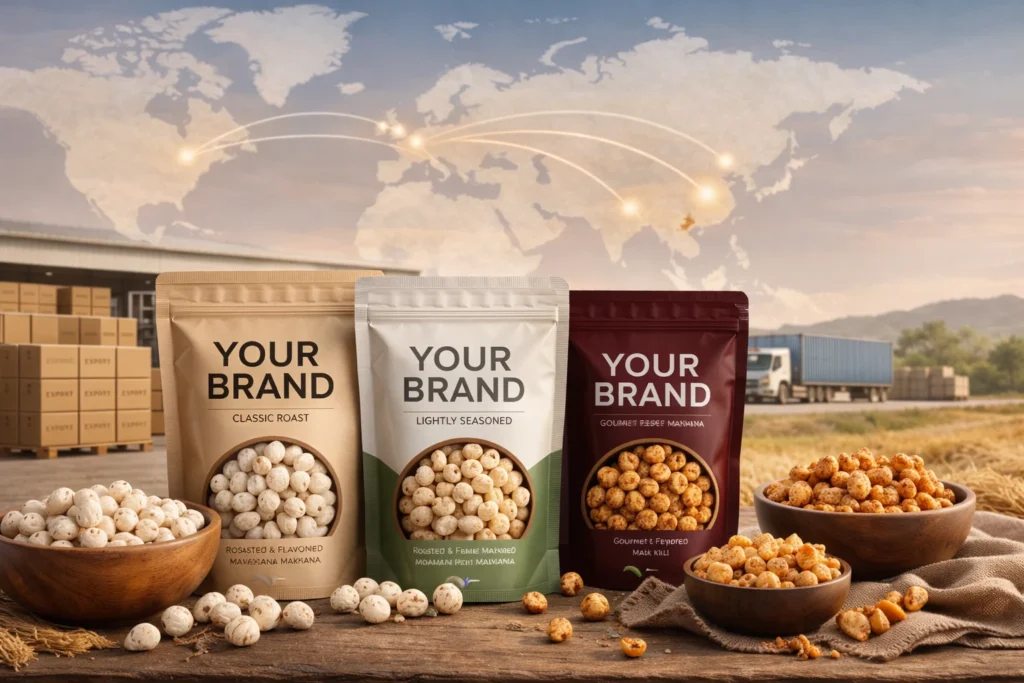
Makhana wholesale USA is rapidly emerging as a strategic entry point for global snack brands looking to capitalize on the rising demand for healthy, plant-based snacks. Fox nuts, also known as makhana, have moved beyond niche wellness stores and are now appearing on mainstream retail shelves across the United States. Behind this growth lies a powerful business model: makhana private labeling.
Private labeling allows brands to transform wholesale makhana sourcing into fully branded, retail-ready products without owning manufacturing infrastructure. This approach reduces risk, speeds up market entry, and enables brands to focus on growth rather than production complexity.
Why Makhana Is Gaining Momentum in the USA
Consumer preferences in the USA are shifting toward clean-label, gluten-free, and low-fat snacks. Makhana naturally fits into these trends due to its nutritional profile, long shelf life, and versatility. Retailers and eCommerce platforms are actively seeking differentiated snack products that align with wellness positioning.
However, sourcing alone does not guarantee retail success. Brands must convert bulk makhana into standardized, compliant, and attractively packaged products that meet U.S. market expectations. This is where makhana private labeling plays a critical role.
The Journey from Wholesale to Retail-Ready
Moving from makhana wholesale USA sourcing to store shelves involves multiple stages, each requiring precision and expertise.
1. Quality-Controlled Sourcing
Wholesale makhana must meet strict parameters related to size, moisture content, texture, and cleanliness. Retail-grade products demand consistency across batches, which is difficult to manage without professional processing systems.
2. Flavor and Product Customization
Private labeling enables brands to develop flavors tailored to specific consumer segments—whether savory, gourmet, functional, or clean-label. Instead of selling generic fox nuts, brands can introduce differentiated SKUs that command higher margins.
3. Standardized Processing
Uniform roasting, seasoning application, and portion control are essential for retail acceptance. Contract-based private label manufacturing ensures every pack delivers the same taste, crunch, and quality.
How Private Labeling Accelerates Retail Expansion
Faster Market Entry
Launching a snack brand traditionally requires capital-heavy infrastructure. With makhana private labeling, brands bypass this barrier and move directly from concept to commercialization.
Retail & eCommerce Readiness
Private label partners ensure products are designed for retail logistics, including barcoding, batch tracking, and shelf-life optimization—key requirements for U.S. distributors and retailers.
Scalable Production
As demand grows, production can be scaled without operational disruptions. This flexibility is crucial for brands entering multiple retail channels simultaneously.
Compliance and Market Trust
For makhana wholesale USA brands, regulatory compliance is non-negotiable. Retailers require accurate nutritional labeling, allergen disclosures, and adherence to food safety standards.
Private label manufacturing supports:
-
FDA-aligned processing practices
-
Export-ready documentation
-
Traceability from source to shelf
This compliance framework builds trust with distributors, retailers, and end consumers.
Packaging as a Retail Growth Lever
Packaging is often the deciding factor at the shelf. Through private labeling, brands can choose formats that align with their positioning—resealable pouches, premium jars, or eco-friendly materials.
Strategic packaging helps:
-
Improve shelf visibility
-
Communicate health benefits clearly
-
Enhance perceived value
Well-designed packs bridge the gap between wholesale sourcing and consumer purchase decisions.
Why Global Brands Prefer the Private Label Route
International snack brands entering the U.S. market face logistical, regulatory, and cultural challenges. Makhana private labeling simplifies this journey by offering a turnkey solution that includes sourcing, processing, packaging, and quality assurance.
This model allows brands to:
-
Test markets without heavy investment
-
Launch multiple variants quickly
-
Focus on branding, sales, and distribution
Future Outlook for Makhana in the USA
As consumers continue seeking functional and better-for-you snacks, makhana is positioned for long-term growth. Brands that leverage makhana wholesale USA opportunities through private labeling will gain a competitive edge by delivering consistent quality, innovation, and speed.
Private labeling is no longer just a cost-saving strategy—it is a growth engine that transforms raw sourcing into scalable retail success.
FAQs
1. What is makhana wholesale USA?
Makhana wholesale USA refers to sourcing fox nuts in bulk for processing, branding, and distribution within the U.S. snack market.
2. How does makhana private labeling work?
Private labeling allows brands to outsource manufacturing, flavoring, and packaging while selling products under their own brand name.
3. Is private labeling suitable for new snack brands?
Yes, it reduces capital investment, shortens launch timelines, and provides access to established manufacturing expertise.
4. Can private labeled makhana be sold in retail stores?
Absolutely, private label products are designed to meet retail standards, including packaging, labeling, and shelf-life requirements.
5. Why is private labeling important for scaling?
It enables rapid expansion without the operational burden of owning factories, making scaling more efficient and predictable.
